 Image 1 of 1
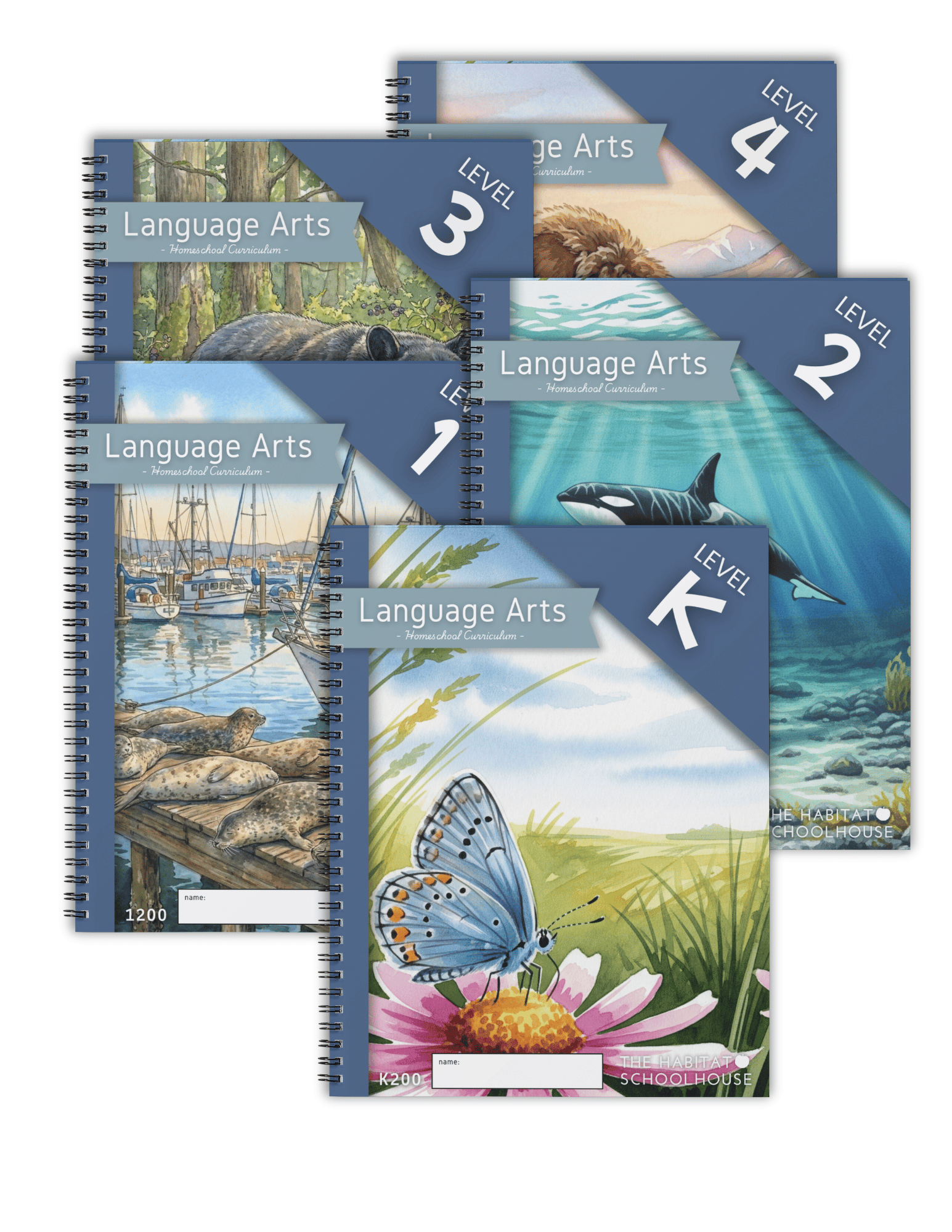
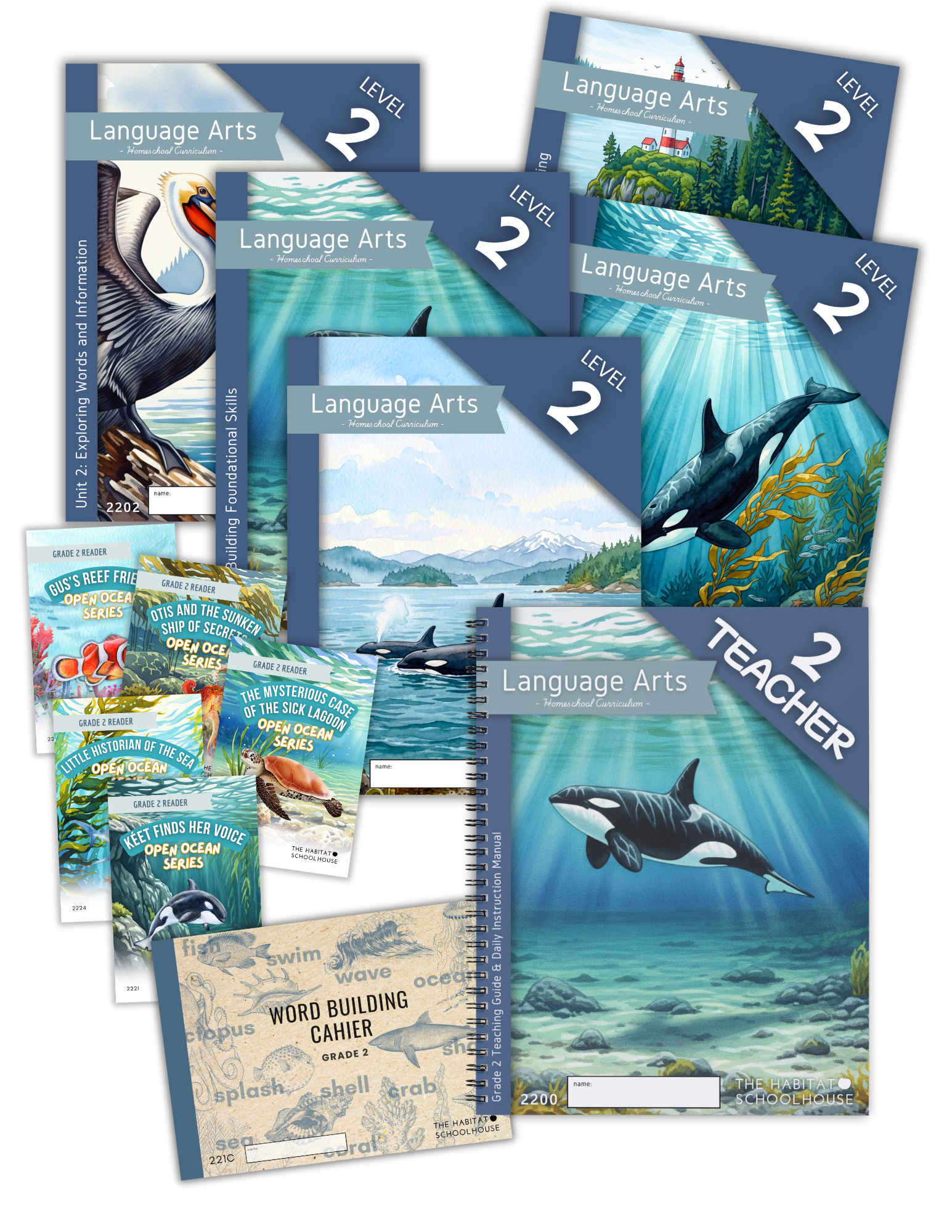
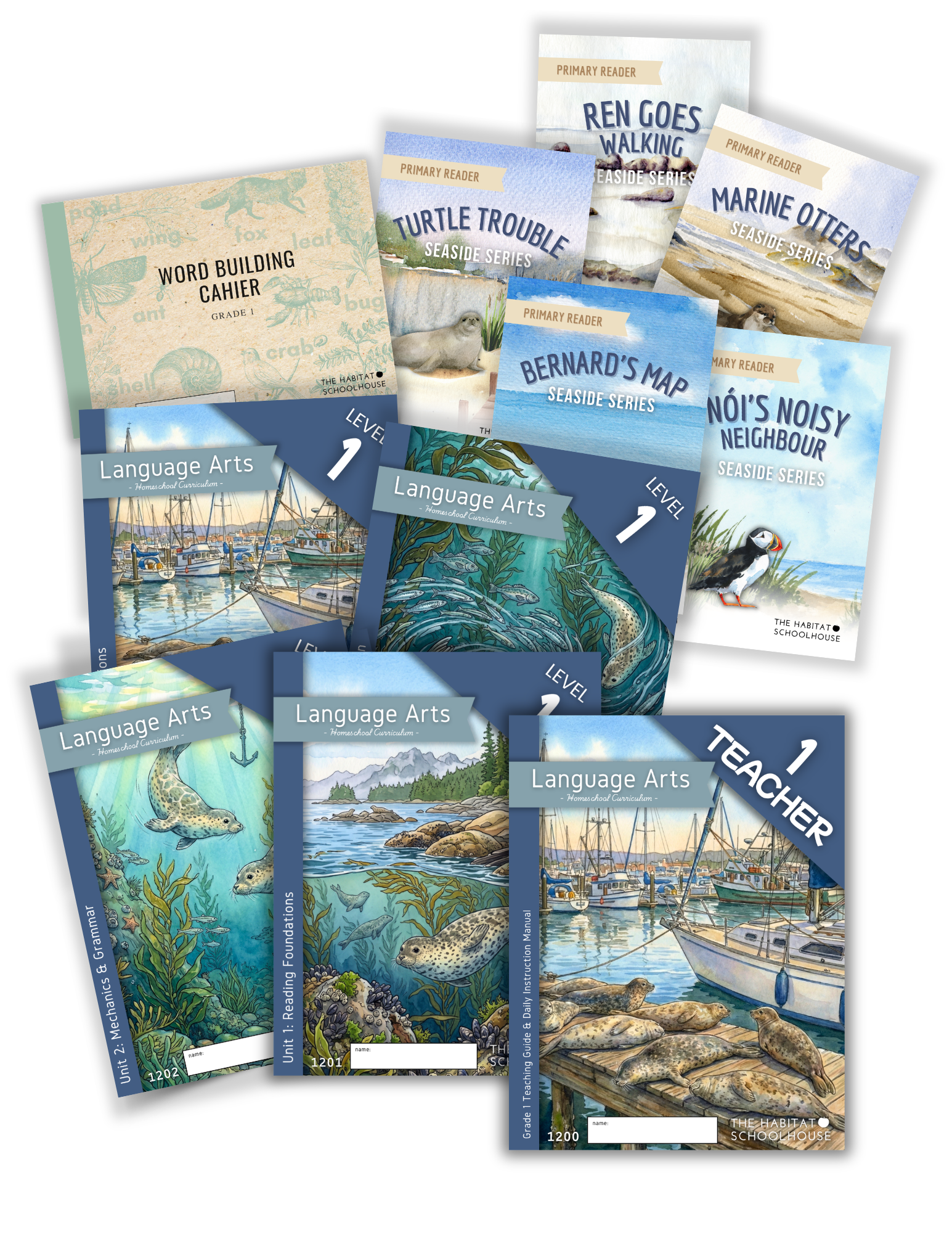
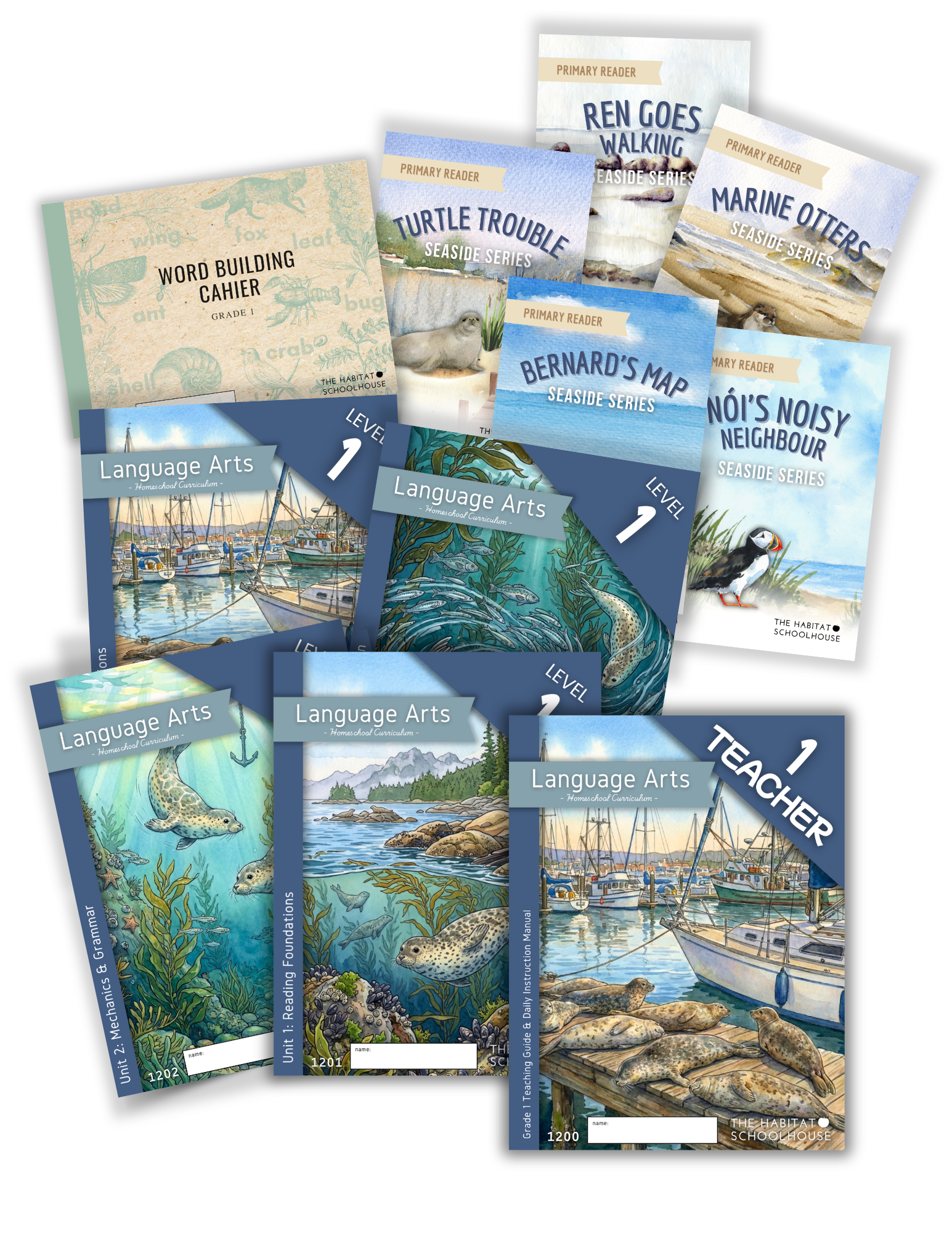
Language Arts: 1st Grade

Please note: If the curriculun you need is not in stock you can always purchase a print-at-home PDF and get started on your curricculum today! Shop PDFs here.
Core Educational Standards Covered
(Canada & United States)
-
CCSS.ELA-LITERACY.RF.1.2: Demonstrate understanding of spoken words, syllables, and sounds (phonemes) by isolating, blending, and segmenting single-syllable words.
CCSS.ELA-LITERACY.RF.1.3: Know and apply grade-level phonics and word analysis skills in decoding words (including digraphs, final -e long vowel sounds, and two-letter blends).
-
CCSS.ELA-LITERACY.RF.1.1: Demonstrate understanding of the organization and basic features of print.
CCSS.ELA-LITERACY.L.1.2.A: Capitalize dates and names of people (and the first word in a sentence and the pronoun I).
CCSS.ELA-LITERACY.L.1.2.B: Use end punctuation for sentences (periods, question marks, exclamation points).
-
CCSS.ELA-LITERACY.L.1.1.B: Use common, proper, and possessive nouns.
CCSS.ELA-LITERACY.L.1.1.C: Use singular and plural nouns with matching verbs in basic sentences.
CCSS.ELA-LITERACY.L.1.1.D: Use personal, possessive, and indefinite pronouns.
CCSS.ELA-LITERACY.L.1.1.E: Use verbs to convey a sense of past, present, and future.
CCSS.ELA-LITERACY.L.1.1.F: Frequently use adjectives to describe nouns.
-
CCSS.ELA-LITERACY.L.1.1.J: Produce and expand complete simple and compound declarative, interrogative, imperative, and exclamatory sentences.
CCSS.ELA-LITERACY.SL.1.6: Produce complete sentences when appropriate to task and situation.
-
CCSS.ELA-LITERACY.RL.1.1: Ask and answer questions about key details in a text.
CCSS.ELA-LITERACY.RL.1.2: Retell stories, including key details, and demonstrate understanding of their central message or lesson.
CCSS.ELA-LITERACY.RL.1.3: Describe characters, settings, and major events in a story, using key details.
-
CCSS.ELA-LITERACY.SL.1.1: Participate in collaborative conversations with diverse partners about Grade 1 topics and texts with peers and adults in small and larger groups (SL.1.1.A, SL.1.1.B, SL.1.1.C).
CCSS.ELA-LITERACY.SL.1.2: Ask and answer questions about key details in a text read aloud or information presented orally or through other media.
CCSS.ELA-LITERACY.SL.1.4: Describe people, places, things, and events with relevant details, expressing ideas and feelings clearly.
-
CCSS.ELA-LITERACY.W.1.8: With guidance and support from adults, recall information from experiences or gather information from provided sources to answer a question.
CCSS.ELA-LITERACY.RL.1.9: Compare and contrast the adventures and experiences of characters in stories.
Core Educational Standards Covered (Canada & United States)
Phonological Awareness & Phonics
CCSS.ELA-LITERACY.RF.1.2: Demonstrate understanding of spoken words, syllables, and sounds (phonemes) by isolating, blending, and segmenting single-syllable words.
CCSS.ELA-LITERACY.RF.1.3: Know and apply grade-level phonics and word analysis skills in decoding words (including digraphs, final -e long vowel sounds, and two-letter blends).
Print Concepts & Conventions
CCSS.ELA-LITERACY.RF.1.1: Demonstrate understanding of the organization and basic features of print.
CCSS.ELA-LITERACY.L.1.2.A: Capitalize dates and names of people (and the first word in a sentence and the pronoun I).
CCSS.ELA-LITERACY.L.1.2.B: Use end punctuation for sentences (periods, question marks, exclamation points).
Grammar & Sentence Structure
CCSS.ELA-LITERACY.L.1.1.B: Use common, proper, and possessive nouns.
CCSS.ELA-LITERACY.L.1.1.C: Use singular and plural nouns with matching verbs in basic sentences.
CCSS.ELA-LITERACY.L.1.1.D: Use personal, possessive, and indefinite pronouns.
CCSS.ELA-LITERACY.L.1.1.E: Use verbsto convey a sense of past, present, and future.
CCSS.ELA-LITERACY.L.1.1.F: Frequently use adjectives to describe nouns.
Sentence Composition
CCSS.ELA-LITERACY.L.1.1.J: Produce and expand complete simple and compound declarative, interrogative, imperative, and exclamatory sentences.
CCSS.ELA-LITERACY.SL.1.6: Produce complete sentences when appropriate to task and situation.
Reading Comprehension & Narrative Understanding
CCSS.ELA-LITERACY.RL.1.1: Ask and answer questions about key details in a text.
CCSS.ELA-LITERACY.RL.1.2: Retell stories, including key details, and demonstrate understanding of their central message or lesson.
CCSS.ELA-LITERACY.RL.1.3: Describe characters, settings, and major events in a story, using key details.
Visual & Multimodal Literacy
CCSS.ELA-LITERACY.RL.1.7: Use illustrations and details in a story to describe its characters, setting, or events.
CCSS.ELA-LITERACY.RI.1.7: Use the illustrations and details in a text to describe its key ideas.
Active Listening & Oral Communication
CCSS.ELA-LITERACY.SL.1.1: Participate in collaborative conversations with diverse partners about Grade 1 topics and texts with peers and adults in small and larger groups (SL.1.1.A, SL.1.1.B, SL.1.1.C).
CCSS.ELA-LITERACY.SL.1.2: Ask and answer questions about key details in a text read aloud or information presented orally or through other media.
CCSS.ELA-LITERACY.SL.1.4: Describe people, places, things, and events with relevant details, expressing ideas and feelings clearly.
Personal & Text Connections
CCSS.ELA-LITERACY.W.1.8: With guidance and support from adults, recall information from experiences or gather information from provided sources to answer a question.
CCSS.ELA-LITERACY.RL.1.9: Compare and contrast the adventures and experiences of characters in stories.